Navigating End-of-Life Conversations with Confidence
Become more skilled at facilitating one of life’s difficult conversations.
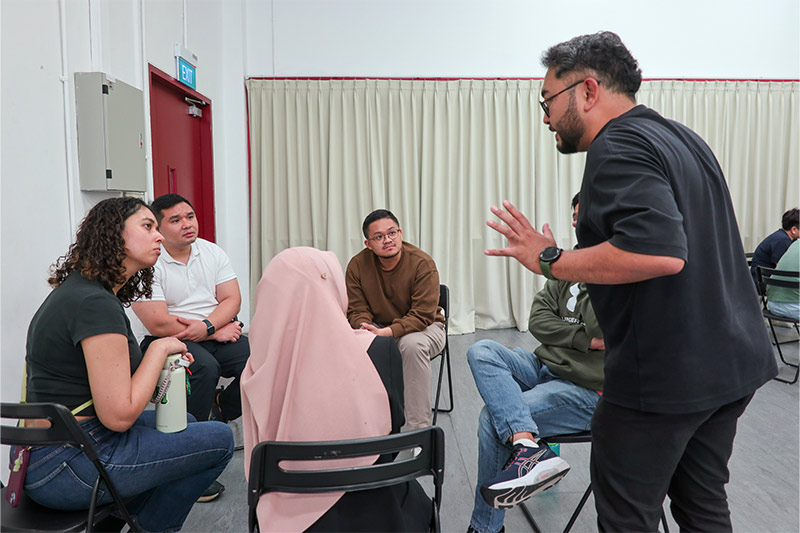
Time pressures, uncertainty about how to begin, and the fear of distressing patients or families often make end-of-life discussions feel daunting. These common challenges contribute to a worrying gap in care, with only 53% of doctors and 31% of nurses felt at ease discussing death. This arts-based workshop tackles those challenges head-on, building your personal readiness to navigate end-of-life conversations.
Through creative and drama-based exercises, explore the personal side of communication and work through the internal barriers that often make these discussions feel daunting. These reflective activities provide a grounded way to hone your communication skills and examine your own attitudes toward death and dying.
Develop practical strategies for handling these difficult moments within your professional practice. You will gain:
- A greater readiness to initiate end-of-life conversations
- An increased sense of comfort in managing your own emotional responses
- A renewed motivation to engage in end-of-life conversations with individuals and their loved ones
And be able to:
- Identify personal barriers to initiate end-of-life conversations
- Increase your confidence in initiating end-of-life conversations
We offer two distinct tracks to ensure the experience fits specific professional contexts:
- For Care Practitioners: This session focuses on facilitating end-of-life conversations within care settings with patients, clients, and their families. Best suited for trained Advance Care Planning advocates or facilitators.
- For Arts, Creative & Community Practitioners: This session focuses on handling end-of-life conversations within community settings.
“It helped me see end-of-life from a broader perspective with less rigidity, and pressure on myself to have certain skillsets and experiences.” – Social Worker, 2025 Workshop Participant
About the Artist Facilitators
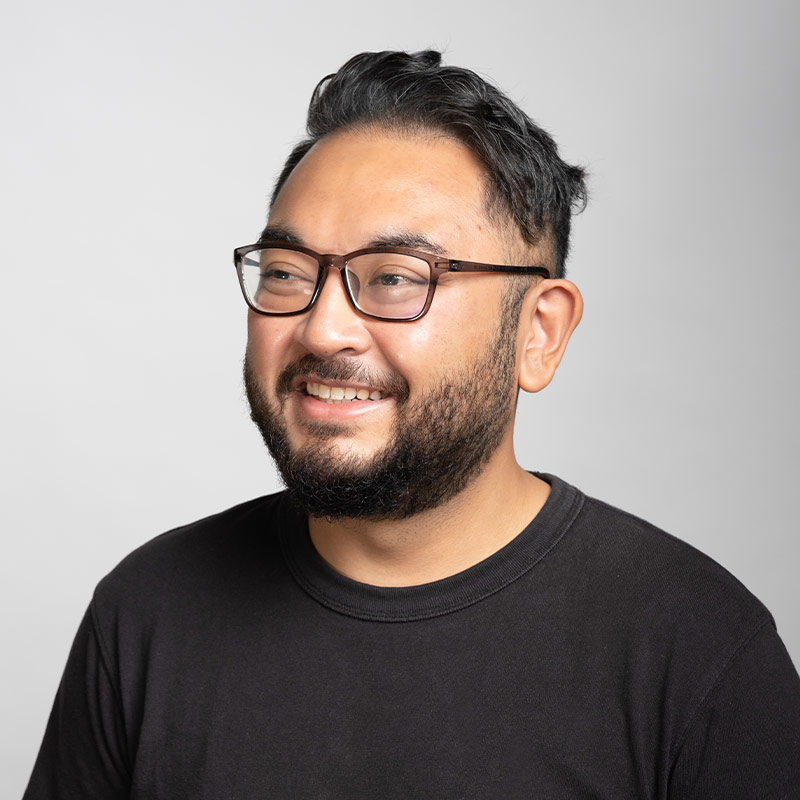
Adib Kosnan
Workshop Facilitator
Adib is an actor, writer, director, educator, and NAC scholar with a MA in Arts Pedagogy and Practice (Distinction) from Goldsmiths, University of London. He is currently an Associate Artist with Checkpoint Theatre.
As co-lead artist for Both Sides, Now: Mengukir Harapan (2021–2022), Adib spearheaded engagement around end-of-life conversations within the Malay-Muslim community. He views theatre as a space to shape thought and life through socially engaged work. Recently, he worked on Air (2024), a verbatim theatre project amplifying Orang Seletar voices on displacement and identity. Adib currently teaches forum theatre and facilitation as an adjunct lecturer at Singapore Polytechnic and LASALLE.
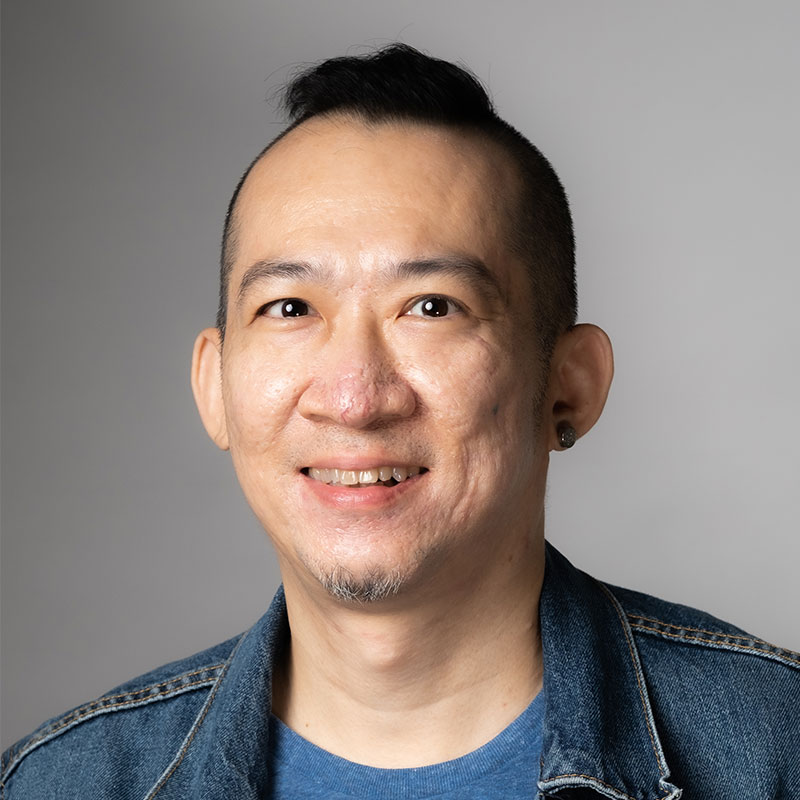
Michael Cheng
Workshop Facilitator
Michael is an applied drama practitioner and educator with extensive experience facilitating workshops and socially engaged arts projects. He has worked with diverse vulnerable communities, including people with disabilities and seniors, exploring themes such as intergenerational communication, active ageing, and social support. He has taught applied drama to educators, artists, and community practitioners in Singapore and internationally.
Michael has collaborated with organisations like Lions Befrienders and TOUCH Community Services on impactful arts-based initiatives. He holds a MA in Arts Pedagogy and Practice (Distinction) from Goldsmiths, University of London, supported by National Arts Council Arts Scholarship.
Frequently Asked Questions
Gallery
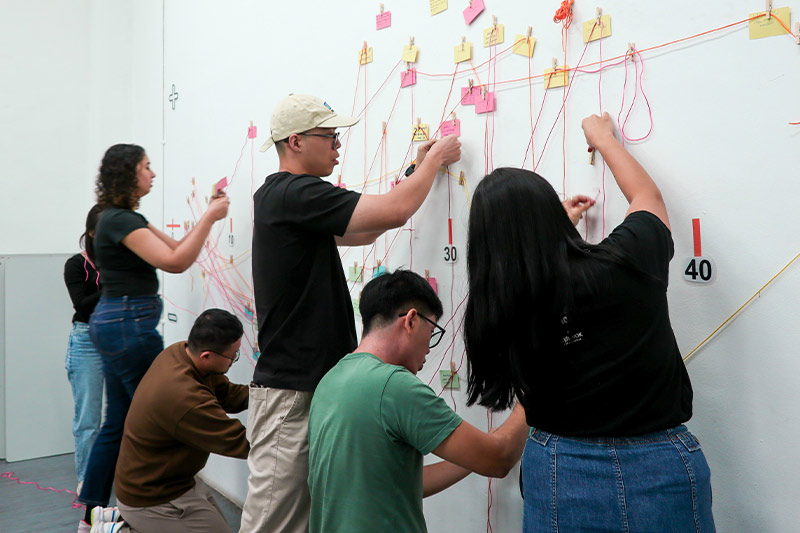
Mapping various highs and lows in their lives, participants identify individual milestones that have shaped who they are as part of the “Life Journey” activity
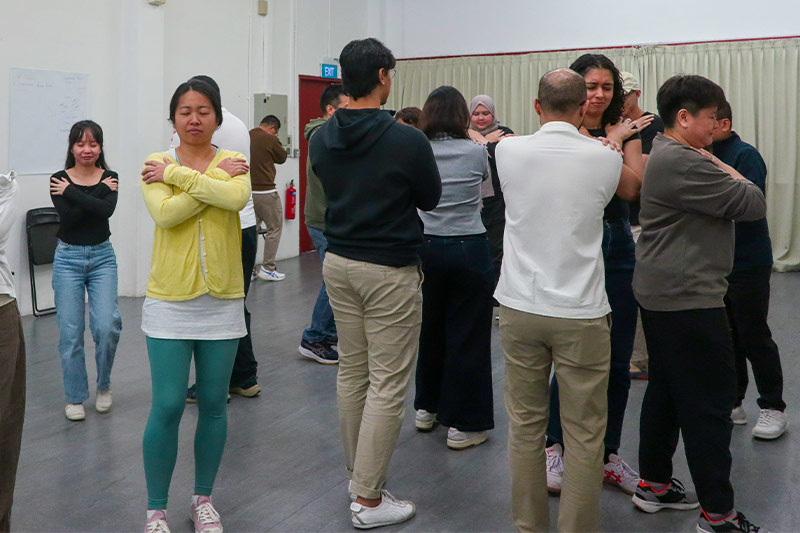
In the “Blind Walk” activity, participants move through the space with their eyes closed and reflect on what it means to navigate unfamiliar situations
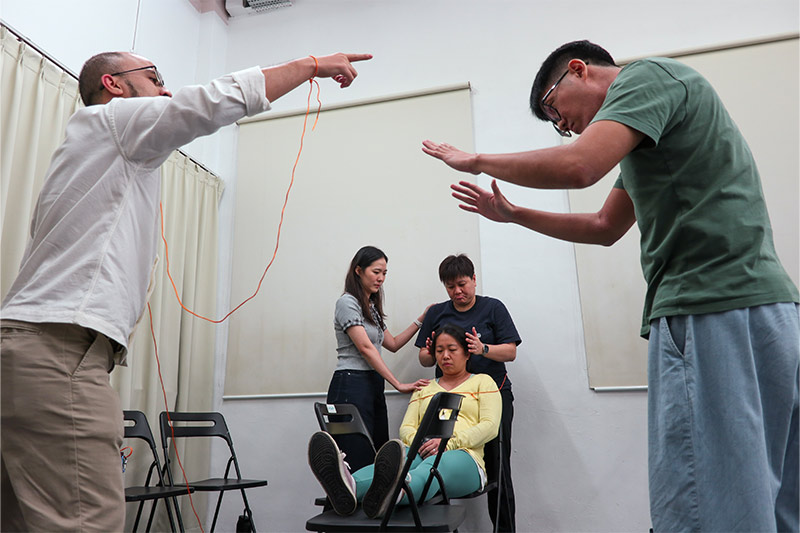
Participants form ‘still images’ to express unforgettable end-of-life encounters, moments shaped by the environments they were in
Community Voices